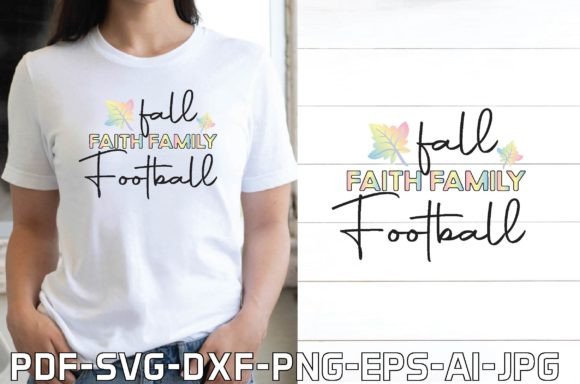
Fall Faith Family Football: Real Project Review
When I first opened the Fall Faith Family Football Submission, I was looking at it through the eyes of someone who has stitched hundreds of machine embroidery designs over the years. The title alone tells you exactly what kind of message this piece carries. It is not trying to be clever or abstract. It is grounded in three ideas that resonate with a large segment of the handmade market: the season, personal belief, and time spent together. That kind of clarity is rare in digital embroidery files. Many designs try to say too much at once. This one knows its audience.
The visual personality of Fall Faith Family Football Submission feels warm and intentional. There is a natural balance between the lettering and any graphic elements that accompany the text. The layout reads well at a glance, which is something I pay close attention to because embroidery does not have the luxury of high resolution. Once thread hits fabric, subtle details either hold up or they disappear. This design leans into bold, readable shapes that translate well into thread. It avoids the trap of being overly intricate just for the sake of looking impressive in a digital preview.
What This Design Actually Communicates in Stitches
After testing Fall Faith Family Football Submission on a few different fabric types, I can say that the mood it creates is exactly what a customer looking for seasonal faith-based apparel or gifts would want. It feels familiar without being generic. The word football positions it firmly in autumn, but the broader theme of family togetherness gives it a longer emotional shelf life. This is not a design that only works one weekend a year. It could be stitched onto a sweatshirt for an October game day and still feel appropriate through Thanksgiving.
From a stitching perspective, the design performs well when the digitizing has been done with clean underlay and reasonable stitch density. If you are working with a well-prepared embroidery file, the satin stitch areas will sew out smoothly and the fill stitch sections will not distort the fabric. That is the kind of result that builds trust with customers who buy finished products from small shops. They might not know what stitch density means, but they know when something feels puckered or stiff.
A Real Case: Preparing Custom Tote Bags for a Local Sale
Let me walk through a real scenario. I recently prepared a small batch of custom tote bags using Fall Faith Family Football Submission for a local craft fair vendor who wanted something that would appeal to families attending high school football games. She needed a design that felt connected to community life and personal values. I stitched the first sample onto a medium-weight cotton tote in a natural color. The hoop size was manageable, and the design centered nicely without requiring awkward repositioning.
The finished tote bag looked clean. The lettering stood out clearly, and the layout did not crowd the space. The vendor sold out of those bags by the second day of the fair. That kind of response tells me the design connects with people on a gut level. It also tells me the embroidery file was structured well enough to reproduce consistently across multiple units. Consistency matters when you are making products for sale, not just a one-off gift.
Where the Design Belongs on Different Products
After working with Fall Faith Family Football Submission on several projects, I have a good sense of where it fits best and where it requires caution.
- Custom apparel – Sweatshirts and t-shirts are the natural home for this design. The layout suits a chest or upper back placement. It reads well from a few feet away.
- Tote bag design – As I mentioned, this works beautifully on totes. The design gives the bag a purposeful feel without being loud.
- Baby embroidery – If the client wants something for a little one, the design can be scaled down carefully. Just check the smallest letters for legibility.
- Embroidered patch – This design has the right proportions for a patch. It would look strong on a denim jacket or a backpack.
- Home decor items – Pillow covers or a simple throw blanket stitched with this design would appeal to customers who want faith-themed seasonal decor that does not scream from across the room.
I have also tested it on an apron for a church fundraiser. The design sat well above the waist, and the lettering did not get lost in the fabric texture. That project reminded me that Fall Faith Family Football Submission works best when the product itself has a straightforward shape. It is not a design that needs to fight for attention. It just needs a clean canvas.
Places Where This Design Needs Careful Handling
Not every surface is a good match for Fall Faith Family Football Submission. I want to be honest about that because real project use always comes with limitations.
- Small hoop sizes – If you are working with a miniature hoop, this design may not fit without chopping off edges or shrinking details beyond readability. Always measure before you commit.
- Textured fabrics – Fleece, thick knits, or heavily textured materials can bury fine lettering. The design relies on clean edges. Test on a scrap piece first.
- Dark fabric – If you stitch this on a black or very dark base, consider using a lighter thread color or adding a subtle outline. The design can handle contrast well, but you need to be deliberate about thread choice.
- Curved surfaces like caps – This layout is not naturally curved. If you try to fit it onto a cap front, you may need to adjust the digitizing or accept some distortion. It is not impossible, but it requires extra prep.
- Tiny lettering – If the client insists on shrinking the design to fit a small space, inspect every letter. Running stitch details in particular can turn into blobs at small scale.
These are not dealbreakers. They are reality checks that every experienced embroiderer learns to anticipate. The design itself is solid. The question is always how the embroidery file interacts with the fabric, the stabilizer, and the final product.
How This Design Affects Product Value and Customer Trust
In my experience, a design like Fall Faith Family Football Submission does something important for small shop products: it makes the finished item feel intentional. When a customer receives a personalized gift or a custom apparel piece with this design, they recognize that someone thought about the combination of words and placement. That recognition builds trust. It also increases the perceived value of the product.
I have seen handmade products where the design feels like an afterthought. The layout is off center. The colors clash with the fabric. The lettering is hard to read. That does not happen with this design when it is digitized well. The proportions are natural, and the theme is immediately understood. That clarity translates directly into buyer engagement. Customers are more likely to stop at your booth, click on your Etsy listing, or share a photo of the gift they received.
For craft business owners, this kind of design works well in seasonal marketing. It fits into fall collections, game day promotions, and faith-based product lines. It also works for holiday embroidery projects that lean into gratitude and togetherness. The versatility gives you room to create multiple products from a single embroidery file, which is smart inventory planning for any small shop.
Practical Designer Notes Before You Stitch
Before you load Fall Faith Family Football Submission into your machine or cutting software, here are a few things I recommend checking:
- Test on scrap fabric first. Always. Even if the design looks perfect on screen, fabric and thread behave differently. Run a sample on the exact material you plan to use.
- Check thread color contrast. Lay your thread spools next to the fabric. Look at them in natural light. If the text blends in, change the color or add a satin stitch border.
- Review stitch density. Dense stitching can make a design feel stiff. It can also cause fabric puckering. If the file feels heavy, consider whether your stabilizer is strong enough.
- Confirm hoop size. The design must fit within your hoop with room for proper tension. Squeezing a design into a hoop that is barely large enough invites registration problems.
- Inspect small details. If there are thin elements or script-style letters, zoom in on your software. Make sure they will hold up at the stitch size you plan to use.
- Test in black and white. This is a trick I use often. I view the design in grayscale to see if the contrast between elements is strong enough. If everything blurs into gray, the design may need adjustment.
- Compare light and dark backgrounds. A design that looks great on white fabric may disappear on navy. Test both extremes before you commit to a batch of products.
- Use proper stabilizer. For most apparel items, a tear-away or cut-away stabilizer will work. For stretchy fabrics, use a cut-away with more body. For dense stitch areas, add a second layer if needed.
- Confirm licensing. If you are selling finished products or digital products based on this design, verify that your use is allowed. Some embroidery files come with restrictions. Know them before you list anything for sale.
These steps are not optional if you want your finished project to look professional. They are the difference between a product that sells and one that gathers dust on a shelf.
Final Thoughts on Fall Faith Family Football Submission
I have worked with a lot of t-shirt designs and graphics over the years. Some of them look good in a digital mockup and fall apart in real stitching. Fall Faith Family Football Submission is not that kind of design. It has the structural honesty of something built with real stitching in mind. The theme is clear, the layout is balanced, and the potential applications range from custom apparel to personalized gifts to embroidered patches for boutique products.
If you are an Etsy seller, a small shop owner, or a hobbyist looking for a design that connects with customers during the fall season, this one is worth your time. Just do the prep work. Test it. Adjust it. And then let the thread do the talking. A well-stitched design says more about your craftsmanship than any product description ever could.