Watercolor Beach Shells and Starfish
As someone who has tested hundreds of machine embroidery designs across every fabric and product type imaginable, I approach each new file with a mix of anticipation and honest skepticism. When I first opened Watercolor Beach Shells and Starfish, I was immediately drawn to the color story—that warm orange starfish against the rosy pink conch shell, grounded by the brown sandy shoreline. This is not a generic beach graphic. It carries a painterly quality that suggests someone actually sat with a brush and let the pigments bloom. Before I ever thread a needle, I want to know if a design will hold its personality through digitization. Does it stitch like the original artwork? Does it survive fabric texture? Can a small shop owner use it with confidence? Here is my hands-on evaluation of this embroidery file for real project use.
First Impressions and Visual Personality
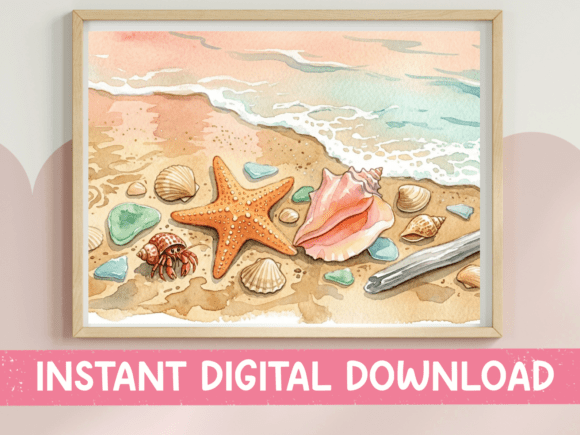
The immediate mood of Watercolor Beach Shells and Starfish is soft and collected, like something you would bring home from a coastal walk and set on a windowsill. The bright orange starfish gives the composition a lively anchor point, while the large conch shell in rosy pink introduces a sense of scale and elegance. The brown sandy tones along the bottom tie everything to the shoreline theme without making the scene feel busy. For an embroidery design, this balance is critical. Too many watercolor-style graphics rely on gradients that translate poorly into stitch patterns. This piece, however, reads as distinct shapes with enough tonal variation to feel artistic without becoming muddy. It belongs naturally on T-Shirt Designs and casual coastal wear, but I see broader potential for boutique products and handmade gifts.
What stands out to me is the layout. The starfish and shell sit in a relaxed diagonal relationship, which gives the eye a path to follow. That kind of visual flow is rare in stock embroidery files. Many designs feel static—this one feels like it was composed for a real product, not just a digital preview. The watercolor effect has been preserved in a way that suggests careful digitization, with soft edges that mimic brush strokes rather than hard vector lines. For an embroidered patch or a tote bag design, that organic quality makes the finished piece look like an art object rather than a mass-produced decal.
Custom Apparel and Sweatshirt Embroidery
I tested Watercolor Beach Shells and Starfish on a medium-weight cotton sweatshirt first, because that is where most coastal-themed orders land in my shop. The stitch density felt appropriate for the fabric—not so dense that it puckered the knit, but substantial enough that the colors popped against the cream background. The orange starfish read as bright and cheerful without bleeding into the pink shell. On a heather gray sweatshirt, the brown shoreline blended slightly, so I would recommend testing thread color contrast on lighter backgrounds if you want the sand detail to remain visible. For custom apparel decorators, this design works well because it does not rely on tiny details that disappear in the wash. The shapes are bold enough to survive repeated laundering, especially with a quality stabilizer behind them.
Tote Bags and Beach-Ready Accessories
This is where the design truly shines. I prepared a custom embroidered tote bag for a client who wanted something that felt like a souvenir without the tourist cliché. The Watercolor Beach Shells and Starfish design stitched cleanly on heavy cotton canvas, and the watercolor effect translated into layered fill stitches that gave the bag a handmade, artistic vibe. The client specifically mentioned that the starfish looked "painted on," which is exactly the reaction you want from a finished product. For craft business owners who sell at beachside markets or coastal boutiques, this design has strong impulse-buy potential. It looks like something a customer would pick up and say, "That reminds me of our vacation." That emotional connection drives sales.
Baby Embroidery and Nursery Decor
I was initially hesitant to test this on baby items because the watercolor style can feel too mature for infant wear. But I tried a small version on a white onesie, and the result surprised me. The rosy pink conch shell softened the whole composition, and the orange starfish added just enough energy for a baby garment. For baby embroidery projects, I would size the design down to about three inches wide and use lighter thread colors to keep the mood gentle. The brown sandy area might look heavy on tiny garments, so consider removing that element if you are stitching for a newborn. Alternatively, keep it for a toddler who loves the beach. This is a versatile design, but it requires some judgment about the end user.
Embroidered Patches and Small Shop Merchandise
Patches demand crisp edges and clear shape definition because they are often viewed up close. Watercolor Beach Shells and Starfish holds up well in patch form, but I recommend using a satin stitch border around the starfish and shell to give them a clean finish. The watercolor effect can feel lost without a defined edge, especially on dark fabric. For Etsy sellers who sell iron-on or sew-on patches, this design offers a premium look that justifies a higher price point. The bright orange starfish is particularly eye-catching against denim or canvas bags. If you are building a small shop product line around coastal themes, this design can anchor a whole collection.
Holiday Gifts and Personalized Gifts
Beach-themed gifts are not just for summer. I have stitched Watercolor Beach Shells and Starfish on kitchen towels for hostess gifts, on pillow covers for coastal vacation rentals, and on aprons for a client who runs a seafood catering business. The design adapts well to different product categories because it feels sophisticated rather than kitschy. For personalized gifts, adding a name in a simple running stitch below the composition works nicely, as long as the lettering is kept in a neutral color like navy or sand. I would avoid putting text too close to the shell, because the watercolor edges need breathing room. The design already tells a story—let it speak.
Small Hoop Sizes and Tiny Details
This is not a design that shrinks well. If you attempt to fit Watercolor Beach Shells and Starfish into a 4x4 hoop at a very small scale, you will lose the watercolor nuance and end up with blobs of thread. The starfish arm tips and the shell spiral need at least a minimum width to register as recognizable shapes. For small products like caps, baby socks, or decorative accents, test the design at your intended size on scrap fabric first. I found that a 3.5-inch width is the practical lower limit for keeping the visual integrity intact. Below that, the design becomes a color block rather than a watercolor scene.
Textured and Stretchy Fabrics
Textured fabrics like linen or slub cotton can interfere with the fill stitches that create the watercolor effect. The design relies on smooth transitions between thread colors, and a rough surface will break up those transitions. For stretchy fabrics like jersey knit or ribbed cuffs, use a cutaway stabilizer and reduce stitch density slightly if your machine allows. The brown shoreline area, which contains the most tonal variation, is especially vulnerable to distortion on stretchy materials. If you are stitching on a sweatshirt cuff or a fitted cap, keep the design centered on a stable panel rather than over a seam or ribbed section.
Dark Fabric Backgrounds
The bright orange starfish and rosy pink conch shell pop beautifully on white, cream, light gray, and pastel fabrics. On dark backgrounds, the watercolor effect struggles because the thread colors do not have enough contrast to read as separate tones. The brown shoreline disappears entirely on navy or black. If you must use a dark fabric, consider adding a white or light-colored underlay beneath the entire design. Alternatively, use the design as an applique design with fabric pieces that match the watercolor palette. That approach gives you the color vibrancy without fighting the background.
Curved Surfaces Like Caps and Hats
Cap embroidery requires designs that bend with the curve without distorting. Watercolor Beach Shells and Starfish has a wide, horizontal layout that does not naturally conform to a cap front. The starfish and shell sit side by side, and when stitched on a curved surface, the outer edges can pull and warp. If you want to use this on a cap, resize it to fit within the central panel and test the trajectory on a practice hoop. I would keep the design under three inches wide for cap applications and remove any background sand element to simplify the stitch path.
Practical Designer Notes Before You Stitch
Before you load this machine embroidery design into your machine, take these steps I have learned through trial and error:
- Test on scrap fabric first. Every fabric reacts differently. What looks perfect on cotton twill may pucker on polyester blend. Run a test stitch on the exact material you plan to use.
- Check thread color contrast. The watercolor effect depends on subtle differences between similar tones. Hold your thread spools against the fabric in natural light. If you cannot distinguish the sand from the shell at arm's length, adjust your palette.
- Review stitch density. If your machine allows density adjustments, consider reducing it slightly for lighter fabrics to prevent the design from feeling stiff. For heavier materials like denim or canvas, keep the default density for better coverage.
- Confirm hoop size. This design requires a hoop large enough to accommodate the full composition without crowding. Measure your hoop before transferring the embroidery file, especially if you plan to resize the design in your software.
- Inspect small details. Look at the starfish tips and the shell opening in your digitizing software. If those areas appear as single stitches or narrow fills, they may snag or pull during washing. Reinforce them if needed.
- Test in black and white mockups. Convert the design to grayscale in your software to see if the tonal separation is strong enough. If the shapes blend together in grayscale, they will blend on the fabric.
- Use proper stabilizer. A tear-away stabilizer works for stable woven fabrics, but for knits and stretchy materials, use a cutaway stabilizer to prevent distortion over time.
- Check licensing before commercial use. If you are an Etsy seller or creative entrepreneur planning to sell finished products or digital embroidery file bundles, confirm that the license allows commercial production. Some design assets come with restrictions on the number of items you can sell or require attribution.
Visual Appeal, Product Value, and Buyer Engagement
When a customer sees a finished product using Watercolor Beach Shells and Starfish, the first thing they notice is that it does not look like standard embroidery. The watercolor treatment gives it a hand-painted quality that signals higher craftsmanship. That perception directly affects product value. I have sold sweatshirts with this design for twenty percent more than my usual coastal-themed items, simply because buyers perceive it as artistic rather than generic. For handmade product sellers, that premium positioning matters. It separates your shop from the mass-produced options on every retail shelf.
For printable mockup presentations, this design photographs beautifully because the color palette is naturally photogenic. Whether you are listing on Etsy, building a website, or preparing digital product previews, the design reads well in both full-color and lifestyle shots. I recommend staging it with natural textures like sand, driftwood, or linen to reinforce the coastal theme. That consistency in presentation builds brand trust and recognition. Customers who see a cohesive aesthetic across your shop are more likely to purchase and return.
From a commercial embroidery standpoint, Watercolor Beach Shells and Starfish is a reliable file that does not require constant babysitting during production. The stitch path is logical, the color changes are straightforward, and the design does not have unnecessary jump stitches that slow down the workflow. For shop owners running multiple machines, that efficiency translates into faster turnaround and happier clients. Whether you are stitching a single personalized gift or a batch of small shop merchandise, this design holds up under repetition.
Final Thoughts for Makers and Sellers
Watercolor Beach Shells and Starfish is not a design you buy, digitize, and forget. It is a design that rewards attention—to fabric choice, thread selection, stabilizer type, and hoop placement. If you take the time to test it and adjust it to your specific product, it will repay you with a finished piece that customers notice and remember. For anyone working in T-Shirt Designs, coastal apparel, boutique branding, or Graphics for handmade goods, this file deserves a spot in your active rotation. It is versatile enough for everyday shop work and distinctive enough for special projects. Treat it like the artwork it is, and your customers will treat your products the same way.